The
Honest Part
I was a shopaholic. An actual, compulsive spender.
I want to be careful here, because it's easy to make this sound charming in retrospect – the fun-loving girl who loved fashion and travel and treated herself. But it wasn't charming when I was living it. It was debt. It was the cycle of earn → spend → earn more → spend more. It was the credit card balance that never quite got paid off. It was the constant low-level anxiety about money that I managed by buying something new.
Shopping was my coping mechanism. My dopamine hit. My way of feeling like life was going somewhere and I was someone worth something – even when my bank account told a different story.
And here is what I know now that I didn't know then: this wasn't a character flaw. It was a financial education gap dressed up as a personality trait.
I had never been taught to think like an owner. I had only ever been taught to think like a consumer.
What
I actually believe
A few things I hold to be true –
and have staked my work on.
Money is a tool, not a reward.
Most people treat money as the prize at the end of hard work. I believe money is infrastructure. It's the material you build with. The question is never just "how do I earn more?" – it's "what am I building with what I already have?"
Freedom is structural, not motivational.
I'm not interested in mindset work that tells you to "believe in abundance" while your business model is designed to keep you trapped. Real freedom comes from architecture – from how you've actually structured your time, your income, your assets. You can't think your way to sovereignty. You have to build it.
The distinction that changes everything is owner vs. operator.
An operator shows up and delivers. An owner has built something that holds up when she doesn't. I spent years being a highly competent operator before I understood this distinction. Now it underpins everything I teach.
Fully passive income is a myth – and I'll say that out loud.
The promise of "make money while you sleep doing nothing" is, largely, a fantasy. But asset-led income – income that is structurally separated from your personal hours – is absolutely real. That's what I'm interested in. Not magic. Architecture.
Wealth is not the opposite of a good life. It's what makes one possible.
I love money. I love making it. I love the freedom it creates. I don't think that's something to whisper or apologise for. I think women especially have been taught that wanting wealth is somehow less spiritual or less feminine than wanting purpose. I disagree with that entirely.
How
WEALTHY WOMAN
was born
I didn't set out to build a coaching company. I set out to share what had worked.
Wealthy Woman – Vauras Nainen in Finnish – grew out of a simple impulse: I had figured something out that most women around me hadn't been taught, and I couldn't stop talking about it.
But before any of that, there was a burnout. A proper one. I had been climbing the corporate ladder – performing, delivering, excelling – until my body and mind simply said no. So while I was recovering, I started building something on the side. Quietly, without fanfare, without quitting anything yet. I was also a new mother, navigating the real, ongoing challenges that come with that – the kind that don't pause for deadlines.
By the time I walked away from corporate, my business was already at six figures. I didn't leap. I built first, then left.
I partnered up with my business partner Terhi Majasalmi and built something that became Finland's leading coaching company for wealth building. What made it special was that it was all for, only for and only by women.
I coached hundreds of women and spoke to thousands. I was featured across national media and spoke on big stages. We wrote and published three bestselling books. And all along, I was also applying the same asset-thinking to the business itself – packaging my methodology, building systems that didn't depend entirely on me, creating a model that could grow without me being the engine of every single delivery. With the demands of motherhood, the architecture I built and now teach wasn't a nice-to-have for me. It still isn’t.
The business started bringing in multi 6 figures each year while I was living my best life. The growth was so impressive that my company was awarded three times with the Achiever award by Kauppalehti, Finland’s leading business publication, for being in the top 9% in the industry in terms of financial performance.
However, I had my biggest reward when I was in Cyprus enjoying my life at a retreat and my phone started lighting up with messages. My clients raving about a Wealthy Woman retreat back home. Transformed. Grateful. Tearful, in the best way. Thanking me for the program I had built and for an experience my co-coaches had led, in a room I hadn't been in.
That was the day I truly understood the difference between being excellent – and being wealthy.
Excellent means you deliver brilliantly. Wealthy means what you've built can deliver even when you don't.
I had lived that distinction before in my personal finances. Now I had lived it in my business. And I realised that these two things – business asset architecture and investment asset architecture – needed to be taught together. Because most women are only ever given half the picture (if even that).
Why the
international market,
WHY NOW.
Finland was where I found the work.
The world is where I’m taking it.
I've spent years coaching Finnish women in Finnish. The results have been real and significant. But the problem I'm solving – high-earning women who are asset-poor, time-poor, and structurally trapped in their own success – is not a Finnish problem. It is a European problem. A global problem.
I vibe the most with women who share my values and a similar level of discernment. Women who are sophisticated, who have built real businesses, who aren't looking for hype or superficial fixes – but who are ready to think differently about what they've built and what it's actually worth.
I want to bring this conversation – about owning your income, not just earning it – to a bigger room.
The person,
not just the work
A few things that aren't on my business card.
I take 18 weeks off a year and I have less than 8 hours of client calls in my calendar each week. That's not a brag – it's a design principle. It's how I know the architecture is working.
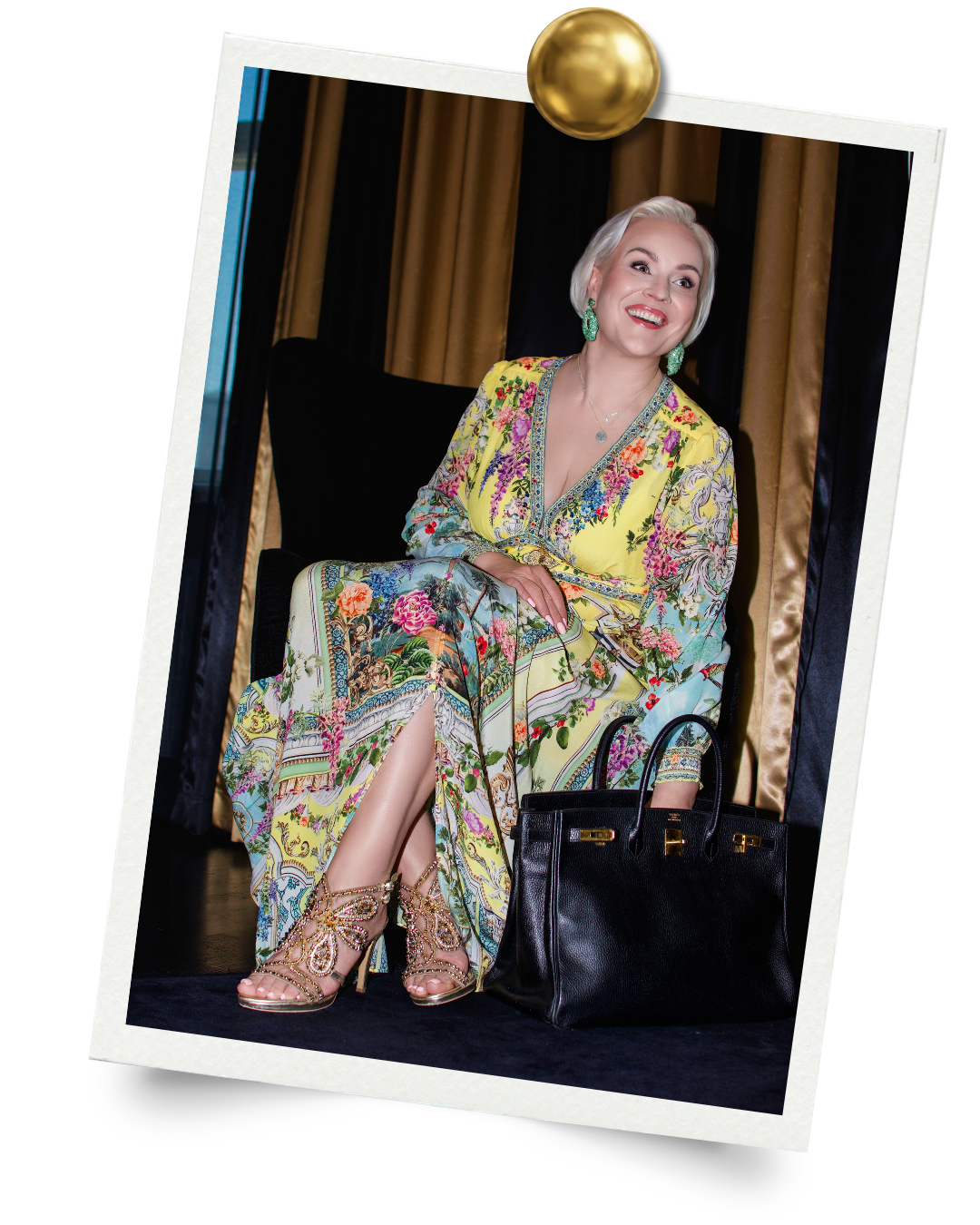
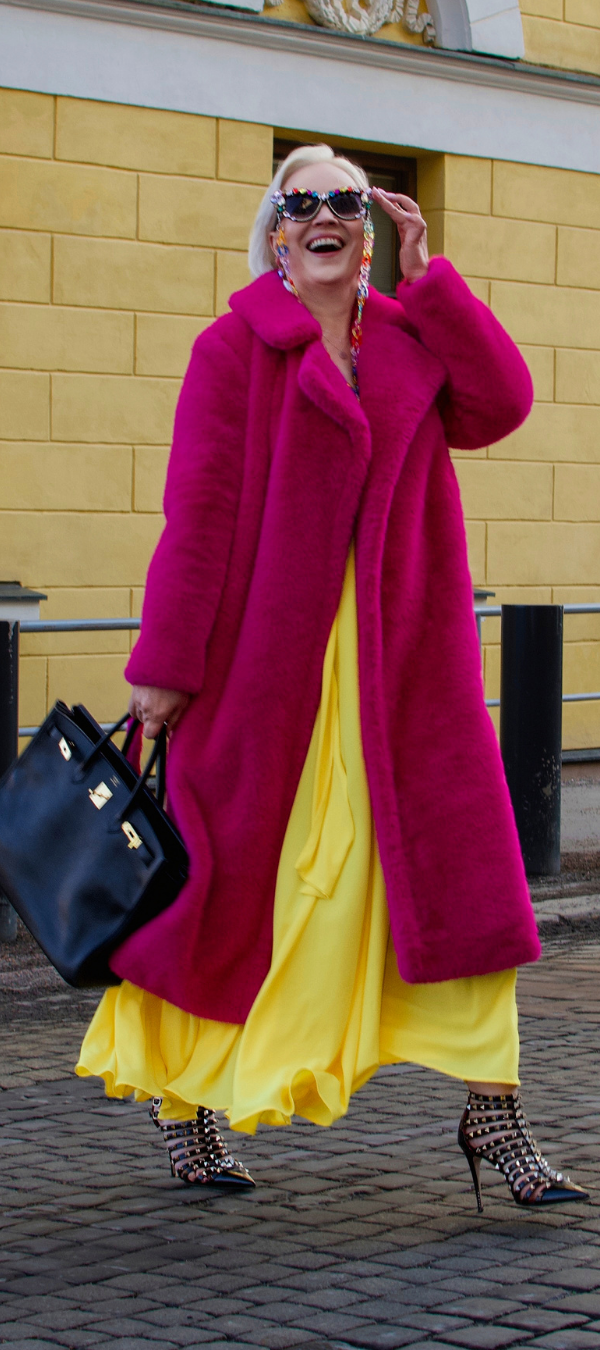
You’ll see me as the boss woman who talks straight about wealth and financial power. You’ll see me as the luxury lover, sipping champagne on first-class flights or at 5-star hotels with my Hermès and my Chanel. But equally I am the most down-to-earth, grounded person you'll ever meet – the one you'll find on the sofa lost in the latest blockbuster, holding my daughter close, enjoying my sauna in the middle of the week, listening to birds sing in the midnight sun, or on the beach listening to the waves for longer than is probably reasonable.
What I am even more passionate about than wealth is self development. I invest six – sometimes multi six – figures into myself each year. I put myself in the room and I'm usually the only Finn in industry events around the world. I was the first Finn to invest $85k into Tony Robbins Platinum Partnership.
I care deeply about women having real financial power, not just financial literacy. There's a difference. Literacy is knowing the words. Power is owning the assets.
I am originally from Oulu, which means I have a Northern Finnish straightforwardness that occasionally alarms people from elsewhere. I say what I mean. I don't dress up hard truths. I prefer deep conversations much more than casual small talk.
I believe the most generous thing I can do for another woman is tell her the truth about money – not the comfortable version, not the aspirational poster version, but the actual structural reality – and then show her what to do about it.
I can see anyone’s financial potential in an instant, and when I tell them what it is, it’s not just hype – it is grounded on years of experience working with hundreds of real women.
That's what this work is. That's who I am.
And I can’t wait to meet you.